Literature, Memory and Intercultural Dialogue
Many of the books explore how memory is preserved through stories, rituals and landscapes. Cultural traditions are approached as living forms of knowledge that continue to evolve through interpretation and dialogue rather than as fixed expressions of heritage.
This perspective allows literature to become a meeting place between generations, connecting ancestral narratives with contemporary readers through symbolic storytelling.
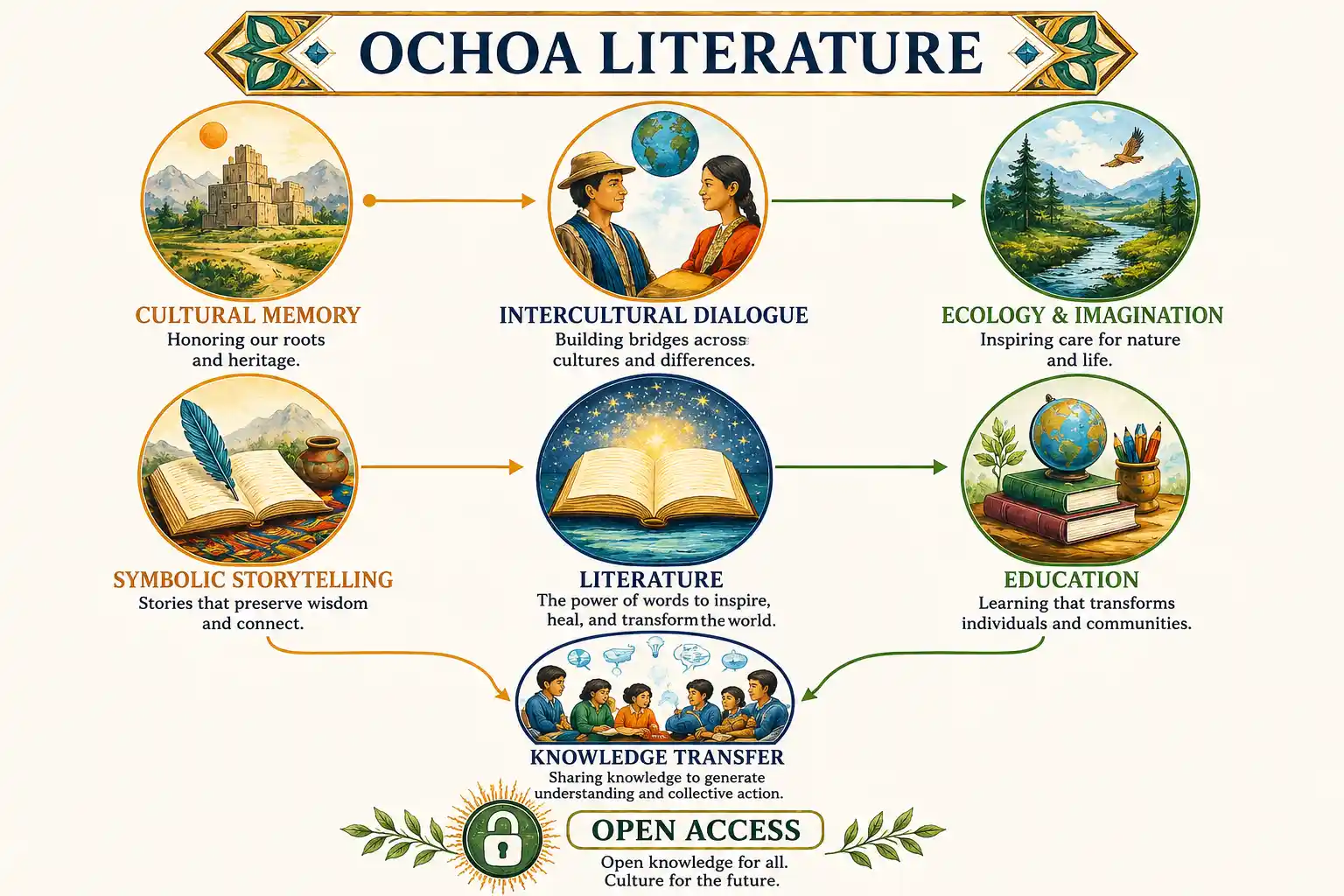
Figure 1. Research framework of Ochoa Literature illustrating the relationships between literature, cultural memory, symbolic storytelling, intercultural dialogue, ecological imagination, education and open-access publishing.
An interdisciplinary literary framework connecting cultural memory, symbolic storytelling, intercultural dialogue and the human experience.
The literary works published through Ochoa Literature emerge from the intersection of literature, cultural memory, education and intercultural dialogue. Rather than treating stories as isolated works of fiction, the project approaches literature as a space where cultural traditions, lived experience and symbolic imagination meet. Through historical fiction, fables, legends and philosophical narratives, the collection explores questions of identity, belonging, ethics and the relationship between people and the world they inhabit.
Many of the books explore how memory is preserved, transformed and transmitted through stories, rituals, symbols and landscapes. Cultural traditions are approached as living forms of knowledge that evolve through interpretation and dialogue rather than as fixed expressions of heritage.
From this perspective, literature becomes a meeting place between generations, connecting inherited knowledge with contemporary experience through symbolic storytelling and imaginative interpretation.
Intercultural Perspective
Interculturality is understood as dialogue rather than comparison. The works do not seek to define or explain cultures exhaustively; instead, they create encounters between different experiences, values and ways of understanding the world.
Through metaphor, silence and symbolic narrative, the books explore themes such as:
Cultural identity
Ethical responsibility
Coexistence
Hospitality
Mutual recognition
Environmental awareness
Readers are invited to interpret these narratives freely, discovering meanings through reflection rather than explicit explanation.
Literature and Education
Literature can create opportunities for learning, dialogue and critical reflection. The publications of Ochoa Literature may be used by teachers, students and readers of different ages as starting points for conversations about culture, ethics, environmental responsibility and critical thinking.
Rather than relying on predetermined moral lessons, the narratives encourage curiosity, independent interpretation and the exchange of perspectives. Literature becomes an invitation to think, question and engage with experiences beyond one’s own.
Symbolic Storytelling
Symbolism is one of the defining characteristics of Ochoa Literature.
Animals, landscapes, myths and everyday objects can become narrative symbols through which complex human experiences are explored indirectly. Identity, memory, loss, hope and belonging emerge through metaphor, inviting readers to participate actively in the construction of meaning.
This approach connects literary imagination with questions explored in philosophy, anthropology and interpretive research while remaining grounded in literary creation.
Ecological Imagination
Nature plays an important role in many of the works. Forests, mountains, rivers and animals may function not merely as settings but as active elements in the narrative, shaping characters, conflicts and meanings.
By exploring the relationships between human communities and the natural world, these stories invite ecological awareness through literary imagination rather than direct environmental instruction.
Open Access and Academic Use
Ochoa Literature is committed to making its publications freely accessible for reading, educational activities and academic discussion. Publications are released under Creative Commons licences, with the applicable licence specified for each work.
Where publications are deposited in Zenodo and assigned a Digital Object Identifier (DOI), these resources support persistent access, identification and academic citation.
The collection can provide material for contexts such as:
The project explores how literature can contribute to artistic expression, reflection on cultural heritage and educational practice.
An Evolving Conversation
The intellectual and literary context of Ochoa Literature continues to develop through new publications, educational experiences and engagement with readers.
This section may expand to include essays on individual books, reflections on intercultural practice, educational applications and further explorations of symbolic narrative, cultural memory and literary imagination.
Rather than imposing definitive interpretations, Ochoa Literature approaches literature as an ongoing conversation—open to new readings, different perspectives and future generations.