
The Honey of the Four Winds
Behind the Story
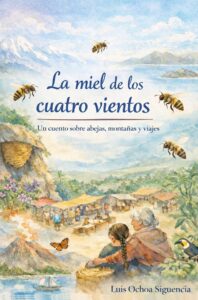
POETIC LEGEND • ECUADOR • BIODIVERSITY
Inspired by Ecuador’s mountain landscapes, The Honey of the Four Winds celebrates bees, biodiversity and the invisible relationships that sustain life, inviting readers to reflect on cooperation, resilience and our shared responsibility for protecting the natural world.
Author: Luis Ochoa Siguencia
Publication: 2026
Genre: Poetic Legend
Setting: Ecuador
Availability: Open Access
Licence: CC BY-NC-SA 4.0
POETIC LEGEND • ECUADOR • NATURE
Inspired by Ecuador’s mountain landscapes, The Honey of the Four Winds celebrates bees, biodiversity and the invisible relationships that sustain life, inviting readers to reflect on cooperation, resilience and our shared responsibility for the natural world.
Author: Luis Ochoa Siguencia
Publication: 2026
Genre: Poetic Legend
Setting: Ecuador
Availability: Open Access
Licence: CC BY-NC-SA 4.0
Why this Story Was Written
Some stories begin with people.
Others begin with the living world.
The Honey of the Four Winds was written to celebrate one of nature’s smallest yet most indispensable beings: the bee. Through a symbolic journey inspired by mountains, winds and the delicate work of pollination, the story invites readers to rediscover the extraordinary importance of creatures that often pass unnoticed. The book presents itself as “a story of bees, mountains and journeys,” establishing from the outset its ecological and symbolic landscape.
Luis Ochoa Siguencia conceived this tale as part of his symbolic literary project dedicated to connecting environmental awareness with cultural imagination. Rather than presenting ecological facts alone, the story transforms the life of bees into a poetic reflection on cooperation, perseverance and the invisible relationships that sustain life on Earth.
The novel does not seek to explain nature.
It invites readers to observe it more carefully.
In an age when biodiversity faces unprecedented challenges, The Honey of the Four Winds reminds us that the future of forests, mountains, crops and human communities depends upon countless forms of life working together in quiet harmony.
Its central question is simple, yet profound:
What would the world become if the smallest acts of care were recognised as the greatest expressions of wisdom?
The Natural World that Inspired the Story
Mountains, Flowers and Living Landscapes
The inspiration for The Honey of the Four Winds comes from the mountain landscapes of Ecuador, where changing winds, flowering plants and diverse ecosystems create ideal conditions for an astonishing variety of pollinators.
These landscapes are more than geographical settings.
They are living communities.
Flowers depend upon insects.
Rivers nourish valleys.
Winds carry seeds and pollen across great distances.
Nothing exists in isolation.
The novel reflects this ecological understanding by presenting nature as an interconnected world in which every living being contributes to the balance of the whole.
Rather than separating humanity from the environment, the story encourages readers to recognise that people also belong to this web of relationships.
Learning from Bees
For thousands of years, bees have inspired admiration across cultures.
They represent diligence, cooperation and the remarkable ability to transform countless small efforts into something of enduring value.
Their work reminds us that great achievements rarely emerge through individual action alone.
Instead, they grow from collaboration, patience and shared purpose.
The Honey of the Four Winds transforms this natural reality into symbolic fiction, allowing readers to appreciate bees not only as pollinators but also as teachers of resilience, generosity and ecological balance.
The Meaning of the Four Winds
More Than the Directions of the World
The title refers to more than geography.
Across many cultures, the four winds symbolise movement, encounter and the circulation of life.
They carry rain, seeds, scents and change.
In the novel, the winds become symbols of connection.
They remind readers that ideas, traditions and acts of kindness rarely remain where they first begin.
Like pollen carried by the breeze, they travel farther than anyone expects.
The four winds therefore represent openness to the world and the understanding that every life touches many others, often invisibly.
Honey as Shared Wisdom
Honey occupies a unique symbolic place throughout the story.
It is created collectively.
No single bee produces it alone.
It becomes a metaphor for knowledge accumulated through cooperation, memory and time.
Just as honey gathers the essence of countless flowers, cultures gather the experiences of countless generations.
The novel invites readers to recognise that wisdom, like honey, is always the result of many small contributions patiently brought together.
Symbols Throughout the Story
The Bee
The bee symbolises dedication without vanity.
Its work sustains ecosystems while seeking no recognition.
The novel celebrates this quiet form of service as one of nature’s greatest lessons.
Honey
Honey represents memory transformed into nourishment.
It symbolises the sweetness that emerges when patience, cooperation and perseverance are allowed to mature over time.
Like culture itself, honey is created gradually.
The Four Winds
The winds symbolise movement, encounter and renewal.
They carry life across landscapes and remind readers that no community exists entirely alone.
Every culture, every ecosystem and every generation is shaped by exchanges that extend beyond visible boundaries.
Flowers
Flowers symbolise diversity.
Each contributes something unique to the living landscape.
Together they sustain pollinators, enrich ecosystems and reveal that beauty flourishes through variety rather than uniformity.
Mountains
The mountains represent continuity and perspective.
Standing above changing seasons, they witness the journeys of both nature and humanity.
Throughout the story they remind readers that genuine wisdom requires patience.
Flight
Flight symbolises exploration and trust.
Every journey undertaken by the bees reflects the courage required to venture beyond the familiar while remaining connected to one’s community.
The Hive
The hive represents cooperation.
Individual effort finds its fullest meaning when directed towards the wellbeing of the whole.
The novel uses this image to celebrate solidarity rather than competition.
Themes Explored
Interdependence
Perhaps the novel’s most important theme is interdependence.
No flower blooms alone.
No bee survives without the landscape.
No ecosystem remains healthy through isolated effort.
This ecological truth also becomes a human one.
Communities flourish when cooperation replaces indifference and when individual gifts contribute to collective wellbeing.
Environmental Stewardship
Rather than presenting environmental protection as a distant obligation, The Honey of the Four Winds encourages readers to develop affection for the living world.
Care begins with attention.
The story reminds us that protecting biodiversity also means protecting the invisible relationships that sustain agriculture, forests and future generations.
Hope
Hope appears throughout the novel in quiet forms.
Every flower opening to the morning light, every journey completed and every drop of honey created through patient labour becomes a symbol of confidence in the future.
The story celebrates hope as something built gradually through daily acts of care.
Cultural Memory
Although rooted in the natural world, the novel also reflects upon cultural memory.
Communities preserve themselves by passing knowledge, traditions and respect for nature from one generation to another.
The story therefore connects ecological awareness with the continuity of human culture.
Educational Value
Literature for Ecological Learning
The Honey of the Four Winds offers valuable opportunities for interdisciplinary learning across schools, libraries and family reading programmes.
Teachers may use the story to explore:
- biodiversity
- pollination
- bees and ecosystems
- environmental ethics
- symbolic literature
- sustainability
- climate awareness
- cooperation
- cultural heritage
- critical thinking
- ecological citizenship
- emotional connection with nature
Parents may use the story to encourage conversations about responsibility, patience and respect for even the smallest forms of life.
Students are invited not only to learn about nature but also to interpret the symbolic relationships that give the narrative its philosophical depth.
By combining ecological awareness with literary imagination, the book demonstrates how storytelling can nurture both scientific curiosity and ethical reflection.
Reading Experience
Readers approaching The Honey of the Four Winds will discover a gentle, contemplative story where nature becomes both guide and teacher.
Rather than relying upon dramatic action, the narrative unfolds through atmosphere, symbolism and careful observation.
The changing winds, mountain landscapes and the patient work of bees create a rhythm that encourages slow reading and thoughtful reflection.
Children may enjoy the adventure of discovery.
Adult readers may recognise deeper questions about cooperation, environmental responsibility and humanity’s place within the living world.
Although inspired by Ecuador’s mountain landscapes, the novel speaks to readers everywhere.
Every community depends upon invisible acts of care.
Every landscape survives through relationships that deserve protection.
Every generation must decide what kind of world it wishes to leave behind.
About the Author
Luis Ochoa Siguencia is a contemporary author whose symbolic literary works explore the relationship between cultural memory, education and the natural world. Inspired by the landscapes of the Andes and the Amazon, his stories combine poetic language with educational purpose, transforming ecological and cultural themes into narratives that encourage reflection across generations.
His literary project seeks to preserve both intangible cultural heritage and environmental awareness through symbolic fiction that invites readers to see familiar landscapes with renewed attention and respect.
Related Works
Readers who appreciate The Honey of the Four Winds may also enjoy other symbolic works by Luis Ochoa Siguencia inspired by Ecuador’s natural and cultural landscapes.
Kuntur: Guardian of the Heart of the Forest explores ecological wisdom through a poetic fable inspired by the values of the Shuar worldview, where the rainforest becomes a living teacher of silence, memory and compassionate leadership.
Aprender caminando presents learning as a journey shaped by observation, curiosity and attentive engagement with nature, offering a complementary educational perspective rooted in symbolic storytelling.
The Jewel of Inti reflects upon humanity’s relationship with the Sun, the mountains and the ethical meaning of inheritance, inviting readers to consider what forms of wealth truly deserve to be preserved.
Readers interested in broader themes of reciprocity and community may also enjoy The Pact of the Lagoon, where water, memory and cooperation become symbols of the invisible bonds that sustain both landscapes and societies.
Together, these books form an interconnected literary collection in which forests, mountains, rivers, bees and human communities all participate in a shared conversation about life. They remind readers that the smallest creatures, the quietest gestures and the most patient journeys often carry the greatest power to transform the world.