
The Jewel of Inti
Behind the Novel
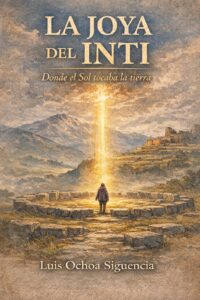
SYMBOLIC NOVEL • ANDES • ANCESTRAL WISDOM
Inspired by the cultural landscapes and spiritual traditions of the Ecuadorian Andes, The Jewel of Inti explores memory, identity, spirituality and the enduring relationship between humanity, nature and ancestral wisdom through symbolic fiction.
Author: Luis Ochoa Siguencia
Publication: 2026
Genre: Symbolic Novel
Setting: Andes • Ecuador
Availability: Open Access
Licence: CC BY-NC-SA 4.0
Why this Story Was Written
Throughout the Andes, the Sun has never been understood merely as a celestial body. It has represented life, rhythm, gratitude and the invisible order that connects human beings with the natural world. The Jewel of Inti was written to explore this symbolic universe through contemporary literary fiction.
Rather than retelling ancient myths or reconstructing historical events, the novel creates an original symbolic narrative inspired by the Andean worldview and the cultural landscapes of Ecuador. It asks a timeless question: what are the treasures that truly deserve to be protected?
In a world that often measures wealth through possession, the novel proposes another understanding of value. The greatest inheritance may not be gold, power or conquest, but memory, wisdom, harmony with nature and the ethical responsibility passed from one generation to the next.
Luis Ochoa Siguencia conceived The Jewel of Inti as part of his broader literary project dedicated to preserving cultural memory through symbolic fiction. Like his other works inspired by the Andes, the novel transforms landscapes, traditions and ancestral symbols into stories that encourage reflection rather than certainty.
The result is not a historical reconstruction, but a literary journey that speaks equally to readers interested in mythology, philosophy, education and cultural heritage.
The Andean World that Inspired the Novel
The Sun in the Andean Worldview
For many Andean civilisations, the Sun was much more than a source of light.
It represented continuity.
Each sunrise reminded communities that life depended upon balance between humanity, nature and the passing of time. Agricultural cycles, ceremonies and collective celebrations all reflected this profound relationship with the natural world.
Within this symbolic universe, sunlight became a metaphor for wisdom, clarity and renewal rather than domination.
The Jewel of Inti draws inspiration from these enduring ideas without attempting to recreate any specific legend. Instead, it builds an original literary world that honours the ethical and spiritual richness of Andean thought while remaining accessible to contemporary readers.
Landscape as Living Memory
The mountains of southern Ecuador preserve more than extraordinary scenery.
They hold archaeological sites, ancient pathways, sacred lakes and generations of oral tradition that continue shaping local identity.
Throughout the novel, the Andean landscape is never reduced to a picturesque background.
It becomes a living presence.
Mountains, rivers, valleys and the changing light all participate in the narrative, reminding readers that human history cannot be separated from the places where it unfolds.
This relationship between landscape and memory forms one of the central inspirations behind the novel.
The Meaning of the Jewel
Beyond Material Wealth
The jewel of the title should not be understood merely as a precious object.
Its deeper significance lies in what every civilisation chooses to preserve.
Cultures survive because they protect values that cannot be measured economically: wisdom, memory, solidarity, language and respect for the natural world.
The novel therefore transforms the idea of treasure into an ethical question.
What do we truly inherit?
What deserves to be passed to future generations?
What becomes lost when material wealth replaces cultural memory?
Rather than answering directly, the story encourages readers to explore these questions through its symbolic narrative.
Light as Inner Knowledge
Throughout the novel, light represents recognition rather than certainty.
True understanding does not arrive suddenly.
Like sunrise over the Andes, wisdom gradually illuminates what was already present but not yet fully seen.
The symbolism of the Sun therefore extends beyond nature into human experience, suggesting that knowledge requires patience, humility and openness.
Symbols Throughout the Novel
The Sun
The Sun symbolises life, continuity and shared existence.
Its light reaches every community without distinction, reminding readers that wisdom is something to be shared rather than possessed.
Throughout the novel, the Sun also represents renewal—the constant possibility of beginning again.
The Jewel
The jewel symbolises the invisible treasures that sustain civilisations.
It represents cultural memory, ethical responsibility and the enduring values that survive long after material wealth has disappeared.
Readers are invited to consider what their own communities regard as truly precious.
Mountains
The Andes stand as symbols of permanence and perspective.
Generations come and go, yet the mountains continue witnessing history without claiming ownership of it.
Within the novel they embody resilience, patience and the continuity of cultural memory.
Rivers
Rivers symbolise movement and transformation.
They remind readers that identity evolves without abandoning its source.
Water connects landscapes just as memory connects generations.
Light
Light becomes a symbol of inner awakening.
Rather than eliminating uncertainty, it allows readers to recognise deeper relationships between people, nature and history.
Its gradual appearance reflects the novel’s contemplative rhythm.
The Path
Every journey within the novel represents an educational experience.
Walking through the landscape becomes a metaphor for discovering values that cannot be inherited automatically.
Understanding grows through attentive participation rather than immediate achievement.
Memory
Memory functions throughout the narrative as a living inheritance.
Communities preserve themselves not only through monuments but through stories, rituals, language and shared experience.
The novel celebrates memory as one of humanity’s greatest treasures.
Themes Explored
Cultural Heritage
At its heart, The Jewel of Inti reflects upon cultural heritage as something continuously renewed rather than simply preserved.
Traditions remain alive when each generation discovers fresh meaning within them.
The novel therefore presents heritage as an active conversation between past, present and future.
Identity
Identity emerges through relationships—with family, landscape, community and history.
Rather than presenting identity as fixed, the novel suggests that it develops through continual dialogue with the values inherited from previous generations.
Harmony with Nature
The story reflects an Andean understanding that humanity belongs within nature rather than above it.
Mountains, rivers and sunlight are not passive settings but participants in the ethical universe of the novel.
This ecological perspective resonates strongly with contemporary concerns regarding sustainability and environmental responsibility.
Hope
Hope appears quietly throughout the narrative.
It is expressed through continuity rather than certainty.
Every act of remembrance, every gesture of care and every decision to protect what truly matters becomes an expression of hope for generations yet to come.
Educational Value
Literature as Cultural Learning
The Jewel of Inti provides rich opportunities for educational discussion across schools, universities and intercultural learning programmes.
Teachers and readers may use the novel to explore:
- Andean cultural heritage
- Ecuadorian history and identity
- symbolic literature
- mythology and cultural symbolism
- environmental ethics
- indigenous knowledge
- cultural memory
- ethics and responsibility
- oral tradition
- intercultural dialogue
- philosophical reflection
Rather than presenting historical information directly, the novel encourages readers to discover cultural values through literary interpretation.
Its symbolic structure makes it suitable for interdisciplinary learning connecting literature, history, philosophy and environmental education.
Reading Experience
Readers approaching The Jewel of Inti will discover a contemplative novel where atmosphere, symbolism and reflection gradually unfold.
The narrative values observation as much as action.
Moments of quiet recognition often carry greater significance than dramatic events, allowing readers to engage intellectually and emotionally with the questions explored throughout the story.
Those interested in Andean mythology, symbolic fiction, cultural heritage and philosophical literature will recognise a narrative tradition that encourages slow reading and thoughtful interpretation.
Although inspired by the Ecuadorian Andes, the novel speaks to universal concerns.
What is true wealth?
What should every generation protect?
How does memory continue shining long after those who first carried it have disappeared?
These questions remain open, inviting each reader to discover personal answers.
About the Author
Luis Ochoa Siguencia is a contemporary author whose literary work explores symbolic fiction, cultural memory and intercultural dialogue. Inspired by the landscapes of the Andes and the Amazon, his novels transform oral tradition, mythology and philosophical reflection into narratives that preserve intangible cultural heritage while addressing universal human questions.
His literary project seeks to build bridges between cultures through stories that celebrate memory, education, ethical responsibility and humanity’s enduring relationship with the natural world.
Related Works
Readers who appreciate The Jewel of Inti may also enjoy other novels within Luis Ochoa Siguencia’s symbolic literary universe.
Aman-Yupanqui, El Niño del Pacto explores ancestral responsibility, promises and cultural identity through an original Andean symbolic narrative inspired by the traditions of southern Ecuador.
The Pact of the Lagoon reflects upon reciprocity, community and the ethical relationship between people and the landscapes that sustain them, extending many of the values explored in The Jewel of Inti.
Aprender caminando presents learning as a lifelong journey shaped by observation, humility and attentive engagement with the world, offering a complementary educational perspective rooted in the Andean worldview.
Readers interested in archaeology, history and the cultural legacy of the Cañari people may continue with Carachula: The Lost Civilisation of the Cañaris, where symbolic fiction and historical imagination come together to explore memory, identity and one of Ecuador’s most fascinating cultural landscapes.
Together, these works form an interconnected literary project dedicated to preserving the intellectual, ethical and symbolic richness of the Andes through timeless fiction. Rather than recreating the past, they invite readers to recognise how ancestral wisdom continues to illuminate the present and inspire the future.