
The Legend of Fanesca
Behind the Story
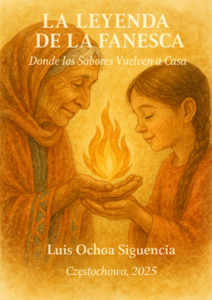
POETIC LEGEND • ECUADOR • CULINARY HERITAGE
Inspired by one of Ecuador’s most cherished culinary traditions, The Legend of Fanesca celebrates memory, generosity, community and the cultural heritage preserved through food, storytelling and shared celebrations.
Author: Luis Ochoa Siguencia
Publication: 2025
Genre: Poetic Legend
Setting: Ecuador
Availability: Open Access
Licence: CC BY-NC-SA 4.0
Why this Story Was Written
Some recipes nourish the body.
Others preserve the memory of a people.
The Legend of Fanesca was written to celebrate one of Ecuador’s most meaningful culinary traditions, transforming a beloved national dish into a symbolic story about community, gratitude and cultural memory. Rather than presenting a historical explanation of the origin of fanesca, the book offers an original literary interpretation inspired by the values that this remarkable meal has come to represent.
Luis Ochoa Siguencia conceived the story as part of his broader literary project dedicated to preserving Ecuadorian cultural heritage through symbolic fiction. Throughout his works, traditions are not presented as museum pieces but as living experiences capable of inspiring reflection across generations.
In this story, food becomes much more than nourishment.
Preparing and sharing a meal becomes an act of remembrance, cooperation and belonging.
The novel invites readers to recognise that cultural identity is often preserved through everyday gestures—recipes handed down within families, stories told around the table and celebrations that bring entire communities together.
Rather than explaining the legend, the story allows readers to experience its symbolic meaning.
The Cultural World Behind Fanesca
A Dish That Tells the Story of a Nation
Fanesca occupies a unique place within Ecuadorian culture.
Prepared traditionally during Holy Week, it brings together a remarkable variety of grains, vegetables and ingredients that have become symbols of unity despite diversity.
Although recipes vary from one region and family to another, the spirit of the dish remains the same.
It is prepared collectively.
It is shared generously.
It brings families together.
This communal character inspired the novel far more than the culinary recipe itself.
The story explores how food becomes part of cultural memory, connecting generations through shared experience rather than written history.
Oral Tradition Around the Table
Many of the world’s oldest stories have not been told in palaces or libraries.
They have been shared around kitchens, family tables and community gatherings.
The preparation of traditional meals often creates opportunities for grandparents to pass memories to children, for customs to be explained naturally and for family identity to be renewed.
The Legend of Fanesca celebrates this oral tradition.
The table becomes a place where stories, values and affection are served alongside food.
In this sense, the novel is as much about listening as it is about eating.
The Meaning of the Legend
More Than an Origin Story
The word “legend” does not necessarily describe historical events.
Instead, legends preserve cultural meaning.
Whether literally true or symbolically imagined, they express the values communities wish to remember.
The legend surrounding fanesca therefore becomes a literary reflection upon generosity, gratitude and collective memory.
The story invites readers to consider that traditions survive because each generation chooses to continue them.
Unity Through Diversity
One of the novel’s central symbolic ideas lies in the extraordinary variety of ingredients that together create a single dish.
Individually, each ingredient possesses its own character.
Together, they create harmony.
This symbolism extends naturally beyond cooking.
Communities also flourish when different people contribute their unique experiences, talents and perspectives while remaining united by shared values.
The novel transforms this culinary image into a broader reflection on coexistence, cooperation and intercultural dialogue.
Symbols Throughout the Story
Fanesca
The dish itself symbolises unity.
Many ingredients become one meal, just as many individual lives contribute to the identity of a community.
Its preparation reminds readers that genuine richness often emerges through collaboration.
The Shared Table
The table represents equality and encounter.
Around it, generations meet, stories are exchanged and differences become opportunities for dialogue rather than division.
Hospitality begins where food becomes something to share rather than possess.
Seeds and Grains
Each grain symbolises individual contribution.
Small by themselves, together they sustain life.
The novel uses this image to celebrate cooperation, diversity and the importance of every member of a community.
The Pot
The cooking pot becomes a symbol of transformation.
Separate ingredients gradually create something entirely new while preserving their individual character.
This quiet transformation reflects the way cultures continually evolve without losing their identity.
Fire
Fire represents continuity.
It transforms without destroying.
Throughout the novel, fire symbolises the living traditions passed from one generation to the next through care, patience and shared work.
Bread
Bread symbolises generosity.
It reminds readers that the simplest acts of sharing often possess the deepest human significance.
Across cultures, bread represents welcome, trust and community.
Memory
Memory is the invisible ingredient present in every traditional recipe.
The novel suggests that recipes preserve more than flavours.
They preserve affection, family history and the wisdom accumulated across generations.
Themes Explored
Cultural Heritage
At its heart, The Legend of Fanesca celebrates intangible cultural heritage.
The novel demonstrates that traditions survive not because they remain unchanged, but because people continue giving them meaning within contemporary life.
Cooking, storytelling and celebration all become acts of cultural preservation.
Community
The story reflects the importance of cooperation.
Preparing fanesca traditionally involves shared effort, making the meal itself a symbol of collective responsibility and mutual care.
The novel suggests that communities become stronger when every individual contributes to the wellbeing of others.
Gratitude
Gratitude quietly accompanies every chapter.
Rather than appearing as obligation, it emerges through appreciation for family, ancestors, harvests and the generosity of those who came before us.
The story encourages readers to recognise gratitude as an essential element of cultural continuity.
Intercultural Dialogue
Although deeply rooted in Ecuadorian tradition, the novel speaks to readers from every culture.
Every society possesses meals that gather families, celebrations that renew identity and stories that preserve memory.
The legend therefore becomes an invitation to appreciate cultural diversity while recognising shared human experiences.
Educational Value
Literature That Preserves Living Heritage
The Legend of Fanesca offers rich educational opportunities for schools, families, libraries and intercultural learning programmes.
Teachers and readers may explore themes including:
- Ecuadorian cultural heritage
- food traditions and identity
- oral tradition
- symbolic literature
- intercultural dialogue
- community cooperation
- gratitude
- family history
- cultural diversity
- intangible cultural heritage
- ethics of sharing
The story may also encourage interdisciplinary learning connecting literature, history, cultural studies and gastronomy.
Rather than explaining traditions through factual description alone, the novel allows readers to experience their emotional and symbolic significance.
Reading Experience
Readers approaching The Legend of Fanesca will discover far more than a story about food.
It is a gentle reflection on memory, generosity and the invisible ties that bind families and communities together.
The narrative unfolds with warmth and contemplation, allowing symbolic images to emerge naturally through everyday experiences.
Its rhythm resembles the slow preparation of a traditional meal: patient, collaborative and attentive to detail.
Although inspired by one of Ecuador’s best-loved traditions, the questions explored throughout the story possess universal relevance.
What truly nourishes a community?
Why do certain traditions survive for centuries?
Can a shared meal preserve memories that no history book could ever record?
Each reader is invited to answer these questions through personal reflection.
About the Author
Luis Ochoa Siguencia is a contemporary author whose literary work explores symbolic fiction, cultural memory and Ecuador’s rich intangible heritage. Inspired by the traditions of both the Andes and the Amazon, his stories transform everyday customs, oral traditions and cultural symbols into narratives that encourage reflection, dialogue and educational discovery.
Across his literary project, he seeks to preserve heritage not by reproducing the past, but by revealing its continuing relevance for contemporary readers.
Related Works
Readers who enjoy The Legend of Fanesca may also appreciate other symbolic works by Luis Ochoa Siguencia inspired by Ecuador’s cultural heritage.
The Jewel of Inti explores the ethical meaning of inheritance, memory and the symbolic relationship between humanity and the natural world through the cultural landscapes of the Andes.
The Pact of the Lagoon reflects upon reciprocity, community and shared responsibility, extending many of the values of cooperation and belonging celebrated in The Legend of Fanesca.
Aman-Yupanqui, El Niño del Pacto examines ancestral memory, promises and cultural identity through an original symbolic narrative inspired by Andean traditions.
Readers interested in the historical imagination surrounding Ecuador’s Indigenous heritage may also discover Carachula: The Lost Civilization of the Cañaris, where archaeology, oral tradition and symbolic fiction come together to explore memory, identity and one of the country’s most enduring cultural legacies.
Together, these works form an interconnected literary collection that celebrates Ecuador not simply as a geographical place, but as a living mosaic of stories, traditions, landscapes and communities. Through symbolic fiction, they invite readers to recognise that the richest cultural treasures are often those shared around a table, carried in memory and passed from one generation to the next.