
Thirty Days in the Heart of Silesia
Behind the Journey
LITERARY TRAVEL NARRATIVE • SILESIA • CULTURAL HERITAGE
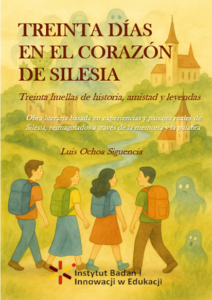
Thirty Days in the Heart of Silesia is a literary journey through one of Central Europe’s most distinctive cultural regions, where history, heritage and everyday encounters become an invitation to discover the deeper meaning of travel, friendship and intercultural dialogue.
Author: Luis Ochoa Siguencia
Publication: 2026
Genre: Literary Travel Narrative
Setting: Silesia • Poland
Availability: Open Access
Licence: CC BY-NC-SA 4.0
Why this Story Was Written
Some journeys are measured in kilometres.
Others are measured in the way they change the traveller.
Thirty Days in the Heart of Silesia was written as a literary journey through one of Europe’s most distinctive cultural regions, inviting readers to discover Silesia not simply as a place on the map, but as a landscape shaped by memory, industry, faith, music and everyday life. Rather than functioning as a conventional travel guide, the book combines narrative, cultural heritage, local legends and personal discovery into a story where every destination becomes an opportunity for reflection.
Luis Ochoa Siguencia conceived this work as an invitation to look beyond the familiar images often associated with Silesia. While the region is widely recognised for its mining heritage and industrial history, the novel reveals another Silesia: one of forests, castles, pilgrimage routes, traditional cuisine, folklore, sacred art, lakes, festivals and communities whose identity has been formed through centuries of resilience and cultural exchange. Throughout the journey, the four travellers keep a shared notebook, discovering that every place becomes part of a larger story about memory and friendship.
At its heart, the book asks a simple but enduring question:
Can travelling become a way of learning to see rather than simply learning where to go?
Rather than collecting tourist attractions, the story encourages readers to collect experiences, conversations and moments that continue travelling long after the journey itself has ended.
The World that Inspired the Journey
Silesia Beyond the Stereotypes
For many people, Silesia evokes images of coal mines, factories and industrial landscapes.
While these elements undoubtedly form an important part of the region’s identity, Thirty Days in the Heart of Silesia reveals a far richer cultural landscape.
Ancient monasteries stand beside modern cities.
Forests preserve legends passed down through generations.
Castles overlook rivers and valleys.
Pilgrimage sites coexist with football stadiums, theatres and museums.
The book demonstrates that Silesia cannot be understood through a single image.
Its identity has been shaped by centuries of cultural exchange, religious traditions, industrial innovation and everyday community life.
The journey therefore becomes an invitation to rediscover one of Central Europe’s most fascinating regions through curiosity rather than preconception.
Learning Through Travel
The novel presents travel as an educational experience rather than simple tourism.
Each destination offers more than historical information.
Every town contributes a story.
Every landscape carries memory.
Every conversation reveals another way of understanding local culture.
The travellers gradually realise that learning a language, sharing meals and listening to local legends are all forms of cultural hospitality.
By the end of the journey, they understand that they have not merely visited Silesia.
They have learned to inhabit its rhythm.
As the epilogue suggests, the greatest discovery is not vocabulary alone, but a new way of seeing the world.
The Meaning of Thirty Days
Time as Transformation
The title is more than a measure of duration.
Thirty days symbolise the gradual rhythm through which understanding develops.
Cultures cannot be understood in a single afternoon.
Neither can friendships.
The journey unfolds slowly, allowing places to reveal themselves through repeated encounters rather than hurried observation.
Every day becomes another page in a shared notebook, another step towards recognising that travel is less about movement than about attention.
The Heart of Silesia
The “heart” of the title is not a geographical centre.
It represents the living spirit of the region.
Sometimes this heart is found in historic sanctuaries.
Sometimes in mining districts.
Sometimes in forests, village festivals or conversations shared over coffee and traditional meals.
The novel suggests that every place possesses an invisible heart that becomes visible only to those willing to listen.
Symbols Throughout the Story
The Journey
The journey symbolises personal transformation.
Every road travelled changes not only the destination reached but also the traveller who walks it.
Movement becomes a metaphor for openness to new cultures and new perspectives.
The Notebook
Throughout the novel, the shared notebook represents collective memory.
Drawings, words, observations and small discoveries gradually become a living archive of friendship and cultural encounter. It accompanies the travellers from the opening pages to the final farewell, preserving every step of the journey.
The Road
The road symbolises dialogue between cultures.
Every kilometre travelled becomes an opportunity to replace assumptions with understanding.
Rather than separating places, roads connect histories, languages and communities.
The Mine
The mines represent labour, resilience and historical memory.
Far beyond their industrial importance, they symbolise the generations whose work shaped the identity of Silesia.
Throughout the novel, mining heritage becomes a reflection upon dignity, perseverance and community.
Music
Music appears repeatedly as a language capable of crossing cultural boundaries.
Whether heard in churches, theatres, festivals or football stadiums, it reminds readers that identity is expressed not only through words but also through shared emotion. The narrative even describes music as a form of resistance and collective memory within Silesia’s industrial history.
Spring
Spring represents renewal.
The traditional ritual of Marzanna, marking the symbolic departure of winter, becomes one of the journey’s recurring images and frames the travellers’ own inner transformation.
Light
Light symbolises understanding.
Throughout the novel, dawns, sunsets and illuminated cities remind readers that every landscape changes according to the way it is observed.
Learning becomes another form of light.
Themes Explored
Cultural Heritage
The novel celebrates both tangible and intangible heritage.
Historic architecture, local traditions, regional cuisine, legends, festivals and everyday customs all contribute to a richer understanding of Silesian identity.
Rather than presenting heritage as something preserved behind museum glass, the story shows it as a living experience shared by local communities.
Friendship
Friendship is the emotional thread connecting the journey.
The four travellers discover that shared experiences deepen relationships in unexpected ways.
Their conversations, humour, misunderstandings and moments of silence become as important as the places they visit.
Language and Communication
Learning another language becomes more than acquiring vocabulary.
It becomes an act of respect.
The novel repeatedly suggests that every new word opens another way of understanding the people who speak it.
The closing pages affirm that language is “a bridge, a root and a journey,” expressing one of the book’s central ideas.
Memory
Every destination leaves traces.
The notebook, photographs, stories and conversations gradually transform the journey into memory.
The novel reminds readers that travel continues long after returning home because places remain alive within those who have truly encountered them.
Intercultural Dialogue
Perhaps the book’s most important theme is dialogue.
The journey demonstrates that cultural understanding begins not through comparison but through attentive listening.
Every tradition encountered becomes an invitation to recognise both difference and shared humanity.
Educational Value
Literature that Encourages Cultural Discovery
Thirty Days in the Heart of Silesia offers valuable opportunities for schools, universities, language courses and intercultural education programmes.
Teachers and readers may explore topics including:
- Silesian cultural heritage
- Polish history and traditions
- intercultural dialogue
- educational travel
- European regional cultures
- language learning
- folklore and oral tradition
- industrial heritage
- symbolic literature
- geography
- friendship
- cultural identity
Because the novel combines fiction with authentic cultural contexts, it provides an engaging introduction to Silesia for readers who may never have visited the region.
It also demonstrates how literature can encourage curiosity, empathy and respect for cultural diversity through storytelling rather than instruction.
Reading Experience
Readers approaching Thirty Days in the Heart of Silesia will discover more than a travel narrative.
They will accompany four travellers whose growing understanding of Silesia mirrors their own.
The rhythm of the book is gentle and contemplative.
Each destination combines history, legend, architecture, gastronomy and personal reflection into a unified literary experience.
The novel rewards slow reading.
Like the journey itself, it encourages readers to pause, observe and appreciate details often overlooked by hurried tourism.
Although deeply rooted in southern Poland, the questions explored throughout the narrative are universal.
How does travel change us?
What makes a place memorable?
Can learning another language also become a way of learning another way of seeing?
The final pages offer a quiet answer: the journey never truly ends, because every place we understand becomes part of the way we look at the world.
About the Author
Luis Ochoa Siguencia is a contemporary author whose literary work explores cultural memory, symbolic fiction and intercultural dialogue. Living and working in Poland while maintaining deep ties with Ecuador, he creates narratives that build bridges between cultures through literature, education and shared human experience.
His books invite readers to discover landscapes not only through geography but also through history, memory and the stories that give places their enduring identity.
Related Works
Readers who enjoy Thirty Days in the Heart of Silesia may also appreciate other works by Luis Ochoa Siguencia that explore the relationship between travel, culture and learning.
Aprender caminando presents learning as a lifelong journey shaped by observation, curiosity and attentive engagement with the world, complementing the educational spirit of Thirty Days in the Heart of Silesia.
The Hospitality of the World reflects upon intercultural encounter, ethical responsibility and the art of welcoming others, extending many of the human values explored through the travellers’ experiences in Silesia.
Readers interested in cultural memory may also enjoy Carachula: The Lost Civilization of the Cañaris, where archaeology, oral tradition and historical imagination reveal another region whose identity has been shaped by centuries of memory and resilience.
For those drawn to symbolic reflections on travel and personal transformation, The Art of Waiting Without Answers offers a more contemplative journey, exploring how patience, uncertainty and quiet observation can become paths towards deeper understanding.
Together, these works form an interconnected literary project in which travel, education and symbolic storytelling invite readers to cross not only geographical borders, but also the invisible frontiers between cultures, memories and ways of seeing the world.