
Carachula: The Lost Civilization of the Cañaris
Behind the Novel
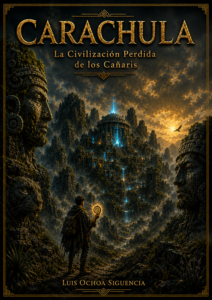
HISTORICAL NOVEL • ANDES • CAÑARI CIVILISATION
Inspired by the archaeological landscapes and cultural legacy of the Cañari people, Carachula: The Lost Civilization of the Cañaris blends history, archaeology and symbolic fiction to explore memory, identity and the enduring dialogue between humanity and place.
Author: Luis Ochoa Siguencia
Publication: 2026
Genre: Historical Novel
Setting: Andes • Cañari Civilisation • Ecuador
Availability: Open Access
Licence: CC BY-NC-SA 4.0
Why this Story Was Written
Some landscapes preserve more than archaeological remains. They preserve questions. Carachula: The Lost Civilization of the Cañaris was written to explore one of those enduring questions: what happens when a civilisation disappears from history but continues to live in memory?
Inspired by the mountains of southern Ecuador and the cultural legacy of the Cañari people, the novel does not attempt to reconstruct the past as a historical document. Instead, it transforms archaeological landscapes, oral traditions and symbolic imagery into literary fiction that invites readers to reflect on identity, cultural continuity and humanity’s relationship with place.
Luis Ochoa Siguencia wrote Carachula as a tribute to the countless voices that shaped the Andean world but remain absent from conventional historical narratives. The novel recognises that history survives not only in monuments and written records but also in stories, landscapes and collective memory.
Rather than presenting ancient civilisation as something lost forever, the book asks whether cultural heritage truly disappears—or whether it simply waits for new generations willing to listen.
The Cañari World that Inspired the Novel
Beyond Archaeology
The inspiration for Carachula comes from the extraordinary cultural landscapes of the Ecuadorian Andes, particularly those associated with the Cañari civilisation. Long before the arrival of the Incas and later the Spanish, the Cañaris developed sophisticated agricultural systems, ceremonial centres, trade networks and a rich symbolic worldview deeply connected to the surrounding mountains.
Today, archaeological remains such as ancient settlements, sacred hills and forgotten pathways continue to stimulate both scientific research and local oral tradition.
The novel stands between these two worlds.
It respects archaeological knowledge while embracing the imaginative possibilities offered by symbolic literature.
Rather than reconstructing historical events, it asks how landscapes themselves preserve memory.
Mountains that Remember
Throughout the Andes, mountains have traditionally been understood as living presences rather than passive geographical features.
They shape climate, agriculture, travel and community life, but they also occupy an important place within Andean mythology and indigenous knowledge.
Many oral traditions describe mountains as guardians of memory, witnesses to human history and symbols of continuity across generations.
This symbolic understanding forms one of the novel’s central foundations.
The landscape is never merely a backdrop.
It becomes an active participant in the narrative.
Between History and Legend
Where Memory Becomes Story
One of the defining characteristics of Carachula is its exploration of the space between documented history and oral tradition.
Historical research provides evidence.
Legends preserve meaning.
Neither entirely replaces the other.
Throughout human civilisation, communities have explained remarkable landscapes through stories that express values, identity and collective experience. These narratives should not necessarily be interpreted as literal history, yet they often preserve cultural truths unavailable through archaeological evidence alone.
The novel embraces this dialogue.
Instead of asking whether every legend happened exactly as told, it explores why certain stories continue to survive across centuries.
Archaeology and Imagination
Archaeological sites inspire curiosity precisely because they leave many questions unanswered.
Walls remain while voices disappear.
Objects survive while intentions fade.
Literature possesses the unique ability to imagine the human experiences that may once have unfolded within these silent places.
For this reason, Carachula complements historical curiosity rather than replacing it.
Readers interested in Ecuador’s archaeological heritage may discover new appreciation for the relationship between scientific knowledge and cultural imagination.
Symbols Throughout the Novel
Stone
Stone represents permanence.
Unlike human generations, stone witnesses centuries of transformation while remaining rooted within the landscape.
Throughout the novel, ancient structures become symbols of cultural resilience rather than forgotten ruins.
They remind readers that memory often survives in unexpected forms.
The Wind
Wind symbolises voices carried across time.
Invisible yet constantly present, it connects landscapes, generations and stories.
Within Andean oral tradition, the wind frequently serves as a messenger between visible and invisible worlds, reminding people that not every form of knowledge can be preserved in written language.
Paths
Ancient paths symbolise continuity.
Generations walk different journeys while following routes established long before their birth.
The novel uses pathways as metaphors for cultural inheritance, suggesting that every generation receives responsibilities as well as opportunities.
Fog
Fog represents uncertainty and discovery.
Rather than concealing reality permanently, it encourages patience.
Only those willing to continue their journey gradually recognise what previously remained hidden.
The symbol reflects both archaeological exploration and personal understanding.
Memory
Memory functions throughout the novel as a living process rather than a collection of historical facts.
Communities remember through language, traditions, ceremonies and relationships with place.
The story repeatedly suggests that forgetting begins not when evidence disappears but when people stop recognising its meaning.
The Condor
Across the Andes, the condor has long symbolised vision, freedom and spiritual connection between earth and sky.
Within symbolic fiction, it frequently represents the ability to perceive relationships extending beyond immediate human concerns.
Its presence reinforces the novel’s broader exploration of perspective and continuity.
Ancient Cities
The lost city itself symbolises humanity’s enduring search for origins.
Whether interpreted literally or symbolically, hidden places encourage reflection upon questions that every civilisation eventually confronts:
Who were we?
What remains after we disappear?
What deserves to be remembered?
Themes Explored
Cultural Memory
At its heart, Carachula explores cultural memory.
The novel suggests that heritage cannot be reduced solely to archaeological monuments or museum collections.
Living traditions, language, family stories and shared landscapes all contribute to preserving collective identity.
This understanding reflects contemporary approaches to intangible cultural heritage recognised throughout the world.
Identity
Identity is presented not as something fixed but as an ongoing conversation between past and present.
Every generation inherits traditions while simultaneously reshaping them.
The novel therefore encourages readers to consider how personal identity develops alongside cultural belonging.
Humanity and Landscape
Modern societies often separate people from the environments they inhabit.
The Andean worldview presented symbolically throughout the novel offers a different perspective.
Landscape becomes teacher, witness and companion.
Mountains, rivers and forests are not passive resources but participants in human history.
This ecological vision remains highly relevant within contemporary discussions surrounding sustainability and environmental ethics.
Educational Value
Literature as Cultural Exploration
Carachula provides valuable opportunities for educational discussion across secondary schools, universities and readers interested in cultural heritage.
The novel may support conversations about:
- Cañari civilisation
- Ecuadorian cultural heritage
- archaeology and historical interpretation
- Andean mythology
- indigenous knowledge
- oral tradition
- symbolic literature
- cultural identity
- environmental ethics
- historical imagination
- intercultural dialogue
Rather than functioning as a history textbook, the novel demonstrates how literature can stimulate curiosity about archaeology, anthropology and regional history while encouraging readers to distinguish between documented history and creative interpretation.
Teachers may also use the book to explore how fiction contributes to preserving intangible heritage.
Reading Experience
Readers should approach Carachula as both an adventure and a meditation.
The novel combines archaeological mystery with symbolic reflection, creating an atmosphere where discovery is intellectual as much as geographical.
Although inspired by real landscapes in southern Ecuador, the narrative reaches beyond regional history.
Its questions belong to every culture.
How does memory survive?
What connects people with the places they inhabit?
Can forgotten histories continue shaping the present?
Rather than offering simple answers, the novel encourages thoughtful exploration.
Its pace allows readers to experience the gradual unfolding of mystery while reflecting upon broader philosophical themes concerning heritage, belonging and the passage of time.
About the Author
Luis Ochoa Siguencia is a contemporary author whose literary work combines symbolic fiction, intercultural literature and cultural heritage. Inspired by the Andes and the Amazon, his narratives transform landscapes, oral traditions and indigenous worldviews into stories that encourage reflection, dialogue and educational discovery.
His literary project seeks to preserve cultural memory not through historical reconstruction alone, but through imaginative storytelling capable of connecting readers from different cultures with universal questions about identity, ethics and humanity’s relationship with nature.
Related Works
Readers who discover Carachula may also enjoy other titles within Luis Ochoa Siguencia’s symbolic literary universe.
- La joya del Inti explores the relationship between memory, environmental balance and the cultural symbolism of the Sun within the Andean worldview.
- Aman-Yupanqui, El Niño del Pacto reflects upon responsibility, ancestral inheritance and the ethical meaning of promises through an Andean symbolic narrative.
- Aprender caminando presents learning as a journey of observation and self-discovery inspired by traditional Andean educational values.
- El pacto de la laguna examines reciprocity, community and cultural memory through a contemplative story centred on one of the most enduring symbolic landscapes of the Andes.
Although each novel stands independently, together they form an interconnected literary project dedicated to exploring the richness of Ecuador’s cultural heritage through symbolic fiction, oral tradition and timeless human questions.