
El pacto de la laguna
Behind the Story
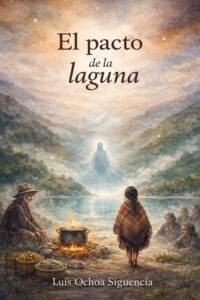
SYMBOLIC FABLE • COMMUNITY • NATURE
Inspired by the landscapes and ancestral traditions of the Ecuadorian Andes, El pacto de la laguna explores community, reciprocity and the enduring relationship between memory, nature and the human spirit through symbolic storytelling.
Author: Luis Ochoa Siguencia
Publication: 2026
Genre: Symbolic Fable
Setting: Andes • Ecuador
Availability: Open Access
Licence: CC BY-NC-SA 4.0
Why this Story Was Written
Throughout the Andes, lakes and lagoons have long been regarded as places where memory, nature and community meet. They are not simply bodies of water but living landscapes that preserve stories, traditions and ways of understanding the world. The Pact of the Lagoon was written to explore this enduring relationship between human beings and the places that sustain them.
Rather than telling a conventional adventure, the story reflects upon one of the oldest questions shared by every society: how can a community remain united while facing change? Through symbolic fiction inspired by the cultural heritage of Ecuador, the novel examines responsibility, cooperation and the fragile balance between individual desire and the common good.
Luis Ochoa Siguencia conceived this work as part of his broader literary project dedicated to preserving cultural memory through symbolic storytelling. The novel draws inspiration from the landscapes and oral traditions of the Andes while addressing universal themes that resonate far beyond a particular place or historical period.
Instead of presenting moral lessons directly, the story encourages readers to reflect upon the invisible agreements that allow communities to flourish: trust, reciprocity, respect and shared responsibility.
The Andean World that Inspired the Story
Lagoons as Places of Memory
Across the Ecuadorian Andes, lagoons occupy a unique place within both the natural landscape and the collective imagination. Many have inspired legends passed from generation to generation, becoming symbols of origin, transformation and continuity.
In traditional Andean thought, water represents much more than a natural resource.
It nourishes crops, shapes settlements and sustains life, but it also reflects the spiritual relationship between humanity and nature. A lagoon is often understood as a place where time moves differently, inviting contemplation rather than haste.
The Pact of the Lagoon draws inspiration from this cultural landscape without recreating any particular legend. Instead, it creates a symbolic narrative that captures the atmosphere of Andean oral tradition while remaining accessible to contemporary readers.
Community and Reciprocity
One of the defining characteristics of Andean civilisation has been the principle of reciprocity.
Communities traditionally survived through cooperation, shared labour and mutual responsibility. Agricultural work, celebrations and ceremonies were collective experiences that reinforced relationships between families and the surrounding environment.
The novel reflects this cultural heritage by presenting community not simply as a collection of individuals but as a living network of relationships.
Every action influences others.
Every decision carries consequences beyond the person making it.
This understanding forms one of the ethical foundations of the story.
The Meaning of the Pact
An Invisible Agreement
The title refers to far more than a formal promise.
Within the symbolic world of the novel, the pact represents the invisible commitments that bind people to one another and to the landscapes they inhabit.
Such agreements are rarely written.
They survive through memory, trust and shared values.
The story therefore explores questions that remain relevant across cultures:
- What responsibilities do we owe future generations?
- How does a community preserve harmony?
- What happens when reciprocity is forgotten?
- Can belonging exist without responsibility?
Rather than offering definitive answers, the novel encourages readers to consider these questions within their own lives.
Responsibility as Shared Heritage
Responsibility is often understood as an individual obligation.
The Andean worldview offers a broader perspective.
Communities flourish when responsibility is shared rather than isolated.
The symbolic pact therefore reflects an understanding that every generation inherits not only traditions but also the duty to protect the cultural and natural heritage entrusted to its care.
Symbols Throughout the Story
The Lagoon
The lagoon symbolises reflection, continuity and collective memory.
Its calm surface invites contemplation while its hidden depths remind readers that many realities extend beyond immediate appearance.
Like memory itself, water preserves reflections without remaining unchanged.
Water
Water represents life, renewal and interdependence.
It connects landscapes, nourishes communities and constantly adapts without losing its essential nature.
The novel uses water to symbolise resilience and the continuous flow of cultural memory across generations.
Mountains
The surrounding mountains represent permanence.
They witness the changing lives of successive generations while remaining rooted within the landscape.
Throughout Andean mythology, mountains frequently symbolise guardianship, wisdom and continuity.
The Path
The journey toward understanding unfolds through movement rather than sudden revelation.
The path symbolises personal growth, reminding readers that wisdom develops gradually through experience and observation.
Every step contributes to transformation.
Silence
Silence occupies an important place within the narrative.
Rather than indicating absence, it creates space for listening, reflection and recognition.
Many traditional cultures value silence as an essential condition for genuine understanding.
The novel embraces this contemplative perspective.
Memory
Memory extends beyond individual experience.
It becomes cultural memory—the living inheritance through which communities preserve identity, values and relationships with place.
The story suggests that forgetting begins not when stories disappear, but when people stop recognising their significance.
Light
Light symbolises understanding rather than certainty.
Moments of illumination allow readers to perceive deeper connections without eliminating mystery.
Knowledge therefore appears gradually, encouraging thoughtful reflection instead of immediate conclusions.
Themes Explored
Community
The novel presents community as a dynamic relationship built upon cooperation, empathy and mutual respect.
Individual wellbeing cannot be separated from collective wellbeing.
This understanding reflects both traditional Andean values and contemporary discussions surrounding sustainable societies.
Environmental Responsibility
Nature appears throughout the story as a living partner rather than a passive setting.
The novel encourages readers to consider environmental stewardship not merely as conservation but as an ethical relationship between people and the ecosystems that sustain them.
This perspective resonates strongly with modern concerns about ecological sustainability while remaining rooted in indigenous knowledge.
Cultural Memory
Stories preserve much more than entertainment.
They transmit identity, ethics and shared experience.
By celebrating oral tradition, the novel demonstrates how literature contributes to safeguarding intangible cultural heritage across generations.
Belonging
Belonging emerges not through possession but through participation.
The story suggests that genuine belonging develops when individuals recognise their responsibilities towards others and the places they call home.
Educational Value
Literature for Schools and Families
The Pact of the Lagoon offers rich opportunities for educational discussion across classrooms, reading groups and family settings.
Teachers may use the novel to explore topics including:
- Andean cultural heritage
- oral tradition
- environmental awareness
- symbolic literature
- ethics and responsibility
- community cooperation
- intercultural dialogue
- indigenous knowledge
- sustainability
- cultural identity
- water as cultural heritage
Parents may use the story to encourage conversations about empathy, cooperation and respect for both people and nature.
Students are invited to interpret symbols, compare cultural perspectives and reflect upon the values that sustain communities.
Rather than presenting simple moral lessons, the narrative encourages critical thinking through symbolic storytelling.
Reading Experience
Readers approaching The Pact of the Lagoon should expect a reflective literary journey rather than a fast-paced adventure.
Its narrative unfolds gradually through atmosphere, symbolism and emotional discovery.
The novel rewards careful reading.
Each landscape, conversation and symbolic image contributes to a broader meditation on memory, cooperation and humanity’s relationship with nature.
Although inspired by the cultural landscapes of Ecuador and the Andean worldview, the questions explored throughout the story possess universal significance.
How do communities remain united?
What responsibilities do we inherit?
How can cultural memory survive within an increasingly changing world?
The novel leaves these questions open, inviting every reader to discover personal meaning.
About the Author
Luis Ochoa Siguencia is a contemporary author whose symbolic literary works explore cultural memory, identity, ethics and humanity’s relationship with the natural world. Inspired by the landscapes of the Andes and the Amazon, his fiction combines poetic narrative with educational reflection, creating stories that preserve intangible cultural heritage while addressing universal human concerns.
His literary project seeks to build bridges between generations, cultures and ways of understanding the world through symbolic fiction that remains accessible to readers of all ages.
Related Works
Readers interested in The Pact of the Lagoon may also enjoy other symbolic narratives by Luis Ochoa Siguencia.
Aman-Yupanqui, El Niño del Pacto explores responsibility, ancestral memory and the ethical significance of promises through an Andean symbolic journey.
Aprender caminando reflects upon learning, observation and personal growth inspired by traditional educational values of the Ecuadorian Andes.
La joya del Inti examines balance, memory and humanity’s relationship with the Sun as a symbol of cultural continuity within the Andean worldview.
For readers interested in the dialogue between archaeology, history and oral tradition, Carachula: The Lost Civilization of the Cañaris expands these themes through a symbolic exploration of one of Ecuador’s most evocative cultural landscapes.
Together, these works form an interconnected literary universe inspired by the cultural heritage of the Andes. Although each novel tells an independent story, all share a common commitment to symbolic fiction, intercultural dialogue and the enduring importance of memory, reciprocity and respect for the living world.