
Nina and the Purple Colada
Behind the Story
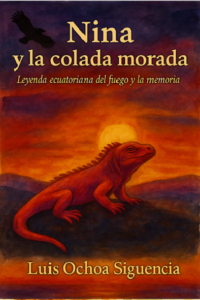
POETIC LEGEND • ECUADORIAN TRADITIONS • CULTURAL HERITAGE
Nina and the Purple Colada celebrates one of Ecuador’s most cherished traditions through a symbolic journey of memory, family and gratitude, revealing how shared rituals preserve cultural identity and strengthen the bonds between generations.
Author: Luis Ochoa Siguencia
Publication: 2025
Genre: Poetic Legend
Setting: Ecuador
Availability: Open Access
Licence: CC BY-NC-SA 4.0
Why this Story Was Written
Some traditions survive because they are written in books.
Others endure because they are prepared, shared and remembered around the family table.
Nina and the Purple Colada was written to celebrate one of Ecuador’s most cherished cultural traditions: colada morada, the ceremonial drink prepared during the Day of the Dead. Rather than explaining the tradition through history alone, the story transforms it into a symbolic journey about memory, gratitude and the invisible ties that unite generations.
Luis Ochoa Siguencia conceived this work as part of his literary project dedicated to preserving Ecuadorian cultural heritage through symbolic fiction. Like many of his stories, the novel does not recreate an existing legend but creates an original narrative inspired by the cultural values that have shaped Ecuadorian identity for centuries.
At the centre of the story is a simple yet profound idea:
Memory is something we prepare together.
Just as the ingredients of colada morada slowly become one, families, traditions and memories are woven together through shared experiences, stories and acts of love.
Rather than teaching history directly, the novel invites readers to discover that cultural identity is nourished in everyday gestures passed from one generation to another.
The Ecuadorian Tradition that Inspired the Story
More Than a Traditional Drink
Across Ecuador, colada morada is much more than a seasonal recipe.
Prepared during the Day of the Dead and shared with guaguas de pan, it represents remembrance, gratitude and the continuity of family life across generations.
Its distinctive purple colour, the richness of its fruits and spices, and the careful preparation required have made it one of the country’s most recognisable cultural traditions.
Yet its greatest importance lies elsewhere.
Preparing colada morada is an act of memory.
Families gather, recipes are remembered, stories are retold and absent loved ones become present once again through shared remembrance.
The novel transforms this living tradition into symbolic literature, allowing readers from every culture to appreciate its emotional meaning.
A Journey Across Ecuador
One of the most distinctive features of the story is that the young protagonist does not simply prepare a recipe.
She undertakes a symbolic journey across Ecuador, gathering gifts from the Coast, the Andes, the Amazon and the Galápagos Islands, gradually discovering that every region contributes something essential to the whole.
Through this journey, the novel celebrates Ecuador not merely as a geographical country but as a community of diverse landscapes, cultures and traditions united by shared memory.
The basket she carries gradually becomes something much greater than a collection of ingredients.
It becomes a symbol of the nation itself.
The Meaning of the Purple Colada
Memory Shared Around the Table
The purple colada symbolises collective memory.
Its preparation requires patience.
Its flavour depends upon many ingredients working together.
No single fruit defines it.
No individual hand creates it alone.
In the same way, cultural identity grows through countless acts of cooperation accumulated across generations.
The novel suggests that remembrance is not an individual act.
It is something communities prepare together.
Remembering as an Act of Hope
The story gently transforms remembrance from sadness into hope.
Remembering those who came before us is not presented as looking backwards.
Instead, memory becomes a way of carrying love into the future.
The novel reminds readers that traditions remain alive because every generation chooses to continue them.
Symbols Throughout the Story
The Purple Colada
The purple drink symbolises memory transformed into life.
Its many ingredients represent the diversity of people, landscapes and experiences that together create a shared cultural identity.
Every spoonful carries both remembrance and hope.
Nina
Nina represents curiosity, generosity and the willingness to build bridges between generations.
Her journey symbolises every child’s search for understanding through questions rather than certainty.
She reminds readers that cultural heritage begins with curiosity.
The Basket
Throughout the story, the basket becomes a symbol of belonging.
As it fills with gifts gathered from different regions, it gradually comes to represent the living heart of Ecuador itself.
The basket carries much more than food.
It carries geography, memory and the voices of an entire country.
Seeds
Seeds symbolise continuity.
The grandmother explains that every seed contains a memory of time itself, reminding Nina that the future is also planted.
They represent the wisdom passed from one generation to the next.
Fire
The fire beneath the clay pot symbolises transformation.
It gathers together the gifts brought from every region and turns them into a single act of remembrance.
Fire becomes the meeting place where memory, affection and hope unite.
The Grandmother
The grandmother represents living memory.
She is not simply an elder.
She embodies the transmission of knowledge that cannot be found in books alone.
Through her, readers discover that traditions survive because someone patiently keeps them alive.
The Sun
Throughout the story, the Sun symbolises unity and renewal.
Rather than functioning as a distant celestial body, it reflects the vitality that returns whenever communities remember how to come together.
Themes Explored
Cultural Memory
At its heart, Nina and the Purple Colada celebrates cultural memory as a living inheritance.
Traditions remain meaningful not because they never change, but because each generation discovers new reasons to preserve them.
The novel presents memory as something active, generous and shared.
Family
Family appears throughout the story as the first place where cultural heritage is experienced.
Recipes, stories, gestures and celebrations become bridges between generations.
The novel reminds readers that some of life’s most important lessons are learned around the kitchen rather than in the classroom.
Unity in Diversity
Each region of Ecuador contributes something unique to the journey.
The Coast, the Andes, the Amazon and the Galápagos all offer different gifts, demonstrating that diversity strengthens rather than divides a nation.
The story transforms this geographical journey into a celebration of coexistence.
Gratitude
Gratitude quietly accompanies every chapter.
It appears in shared meals, remembered ancestors and the recognition that every generation inherits gifts prepared by those who came before.
The novel encourages readers to see gratitude as one of the foundations of cultural continuity.
Educational Value
Literature that Celebrates Intangible Heritage
Nina and the Purple Colada offers rich opportunities for learning in schools, libraries and family reading programmes.
Teachers and parents may use the story to explore:
- Ecuadorian cultural heritage
- Day of the Dead traditions
- colada morada
- symbolic literature
- family memory
- oral tradition
- intercultural dialogue
- geography of Ecuador
- gratitude
- cultural identity
- community
- respect for tradition
Because the novel combines literature with cultural exploration, it can support interdisciplinary learning connecting history, geography, literature, ethics and citizenship education.
Rather than presenting facts alone, the story encourages children to experience heritage emotionally through imagination and reflection.
Reading Experience
Readers approaching Nina and the Purple Colada will discover a gentle symbolic journey where every landscape, every encounter and every shared ingredient contributes to a larger reflection on belonging.
The narrative combines poetic language with cultural richness, allowing younger readers to enjoy the adventure while inviting adults to recognise deeper themes concerning remembrance, identity and family.
Although deeply rooted in Ecuadorian tradition, the novel speaks to readers everywhere.
Every culture has meals that preserve memory.
Every family carries stories that deserve to be remembered.
Every child eventually discovers that the greatest inheritance is not what we own, but what we learn to share.
About the Author
Luis Ochoa Siguencia is a contemporary author whose literary work explores symbolic fiction, cultural memory and Ecuador’s rich intangible heritage. Inspired by both the Andes and the Amazon, his stories transform traditions, landscapes and everyday customs into narratives that encourage empathy, intercultural dialogue and educational discovery.
Through his literary project, he seeks to preserve heritage not by recreating the past, but by revealing its enduring significance for contemporary readers and future generations.
Related Works
Readers who enjoy Nina and the Purple Colada may also appreciate other symbolic works by Luis Ochoa Siguencia inspired by Ecuador’s cultural traditions.
The Legend of Fanesca celebrates another of Ecuador’s most treasured culinary traditions, transforming a shared meal into a symbolic reflection on unity, gratitude and national identity.
The Jewel of Inti explores memory, inheritance and the ethical meaning of cultural treasures through an original story inspired by the Andean worldview.
Aman-Yupanqui, El Niño del Pacto reflects upon responsibility, ancestral memory and identity within the symbolic landscapes of the Ecuadorian Andes.
Readers interested in the dialogue between culture, education and symbolic storytelling may also enjoy Aprender caminando, where learning becomes a journey of observation, curiosity and human growth.
Together, these works form an interconnected literary collection that celebrates Ecuador through its landscapes, traditions, communities and living memory. Rather than simply preserving customs, they invite readers to discover the universal human values that continue to give those traditions meaning across generations.